
Find Your Vehicle

The New Car Buyer Game
Lying Eyes
There’s an old joke. A wife came home early to find her husband with another woman. She angrily declared he was cheating. I am not cheating he declared. Who are you going to believe… me or your lying eyes?
Funny. The automakers are robbing you blind selling unreliable overpriced junk that requires dealer service and spies on you. You are mad. What do they say? Who are you going to believe… us or your lying eyes?
Discover how to see past the shiny new paint, fake leather and big screens to what you are actually asked to buy. Before you take out loans that rival home mortgages. For a vehicle designed for planned obsolescence that depreciates to zero before you make that last payment years from now.
Facts Instead of Opinions
We researched and created Technical Analysis Reports covering Makes, Models and Generations sold in the USA from 2000 to present.
Authoritative data explicitly designed to inform and protect car buyers making a significant financial investment. Comprehensive information from hundreds of sources. No skimpy useless summary rating scores or checkmarks. No opinion surveys from owners who are often emotional and irrational.
All the facts an intelligent buyer needs to make informed decisions without bias or hype. No hedging or pandering to the auto makers. Information not available from mainstream sources or sites wanting to please the manufacturers to maintain ad revenue. Real advice from an automotive expert. Site is ad free with complete confidentiality and privacy. No spam or data sales.
Let’s say you are considering a Honda Civic. The name has been the same but there have been 5 distinct generations. They are for all practical purposes different cars with little in common. Engines, transmissions, suspensions, electronics, software and more have been changed. Even within the same generation one model year may have been great while the next is a complete disaster. Relying on the brand or model name can fool you into buying a lemon that will cost you big money in repairs and resale value.
Over 1,000 detailed robust reports that average over 50 pages (17,000 words). Presented in a clear consistent format to make it easy to use and useful for real world decisions.
Reports have extensive details for 3 important critical categories:
1. Design and Reliability
2. Repair and Maintenance
3. Privacy and Autonomy
The reports are not static. Data is updated continuously for:
1. New car models as make available for sale
2. NHTSA recalls
3. Class-action lawsuits settlements,
4. Technical Service Bulletins from manufacturers
5. Updates on surveillance technologies
Be Your Own Expert
Get the facts and decide for yourself. Forget about useless surveys, biased advice from bought-and-sold media gurus and the opinions from know-it-all friends and neighbors who won’t suffer the consequences of their well-meaning but woefully amateur advice.
We know that if described simply you can understand the technology that is hidden in new cars. We include concise descriptions for every system and technology. Drivers used to be able to pop the hood and identify what was there. You can do this again.
Optional Personal Advisor
We can be your personal expert to help you one-to-one decide on what car is best for your situation. By email or phone. Our nominal fee can be a good investment considering the cost of a bad choice.
The Best Car is Paid For
The old saying They don’t build them the way they used to is all too true today when it comes to cars. They build them worse now. Overly complex, cheap plastic parts, engineered and built to fail just after the warranty expires, stuffed with electronic and software systems that override your control, spy on you and sell your data to insurers and advertisers.
Your best next car may be a previous model, well built and cared for. A reliable car that can endure for hundreds of thousands of trouble-free miles. At a price allowing a cash deal or small loan so you can soon be driving the best car of all. A paid for car. No more monthly payments. The trick is to know precisely exactly what make, model, generation and year to buy.
The Deal
Our mission is to fight back against huge automotive corporations that routinely sell mass-produced junk at whatever price they can get away with. They profit by and rely on your ignorance. Many people feel coerced to buy ridiculously overpriced new cars with payments exceeding $1,000 a month because they think older cars are risky. Let’s face facts. They don’t care about you. The way they act it is fair to say they don’t even like you. They are obsessed with squeezing every last penny out of you and getting a big fat bonus so they can live like kings.
We could charge $100 for our reports but want to make it easy for you to join us. So we offer free summary reports and ask for $10 for a comprehensive detailed report to fund our continued operations and product development. Your support is greatly appreciated. Tell your friends.
Complexity and the End of Reliability
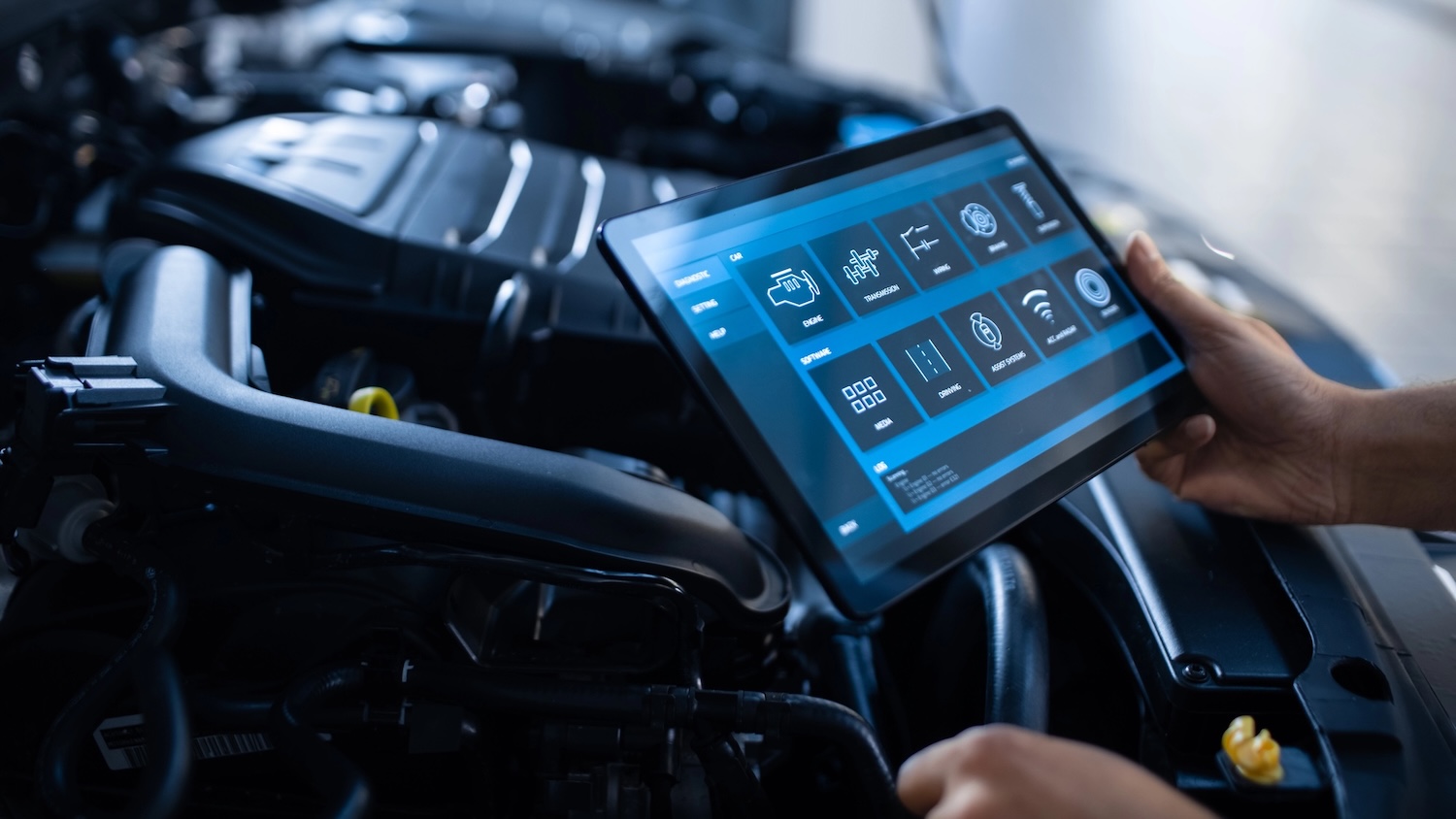
Modern vehicles have morphed into “rolling computers” with up to 150 Electronic Control Units (ECUs) and 100+ million lines of code. This hyper-complexity—driven by software integration and Advanced Driver Assistance Systems (ADAS)—has created a downfall characterized by skyrocketing repair costs, plummeting long-term reliability, and a surge in insurance total losses.
Software-Driven Glitches: Modern cars require massive amounts of code, often surpassing that of commercial airplanes. Rushed development timelines mean code is frequently imperfect, resulting in freezing infotainment systems, ghost sensors, and communication errors.
Plummeting Dependability: Data from studies by groups like J.D. Power show a historical drop in overall vehicle dependability, heavily driven by frustrating tech and software issues rather than core mechanical failures.
Right to Repair Barriers: The proprietary nature of modern car software and intricate digital architecture prevents everyday consumers and independent mechanics from diagnosing or fixing issues themselves, forcing owners into expensive dealership visits.
Astronomical Repair Bills: Repairing a modern car is a massive undertaking. Calibrating fragile sensors requires expensive diagnostic tools (ranging from $5,000 to $20,000) and specialized labor, driving replacement parts and labor costs steadily upward.
Spiking Insurance Costs & Total Losses: Because complex cars cost so much to repair, insurers are increasingly writing them off as total losses (with frequency nearing a record ~23%). This pushes repair bills and insurance premiums to untenable heights.
Is Your Car Spying on You?
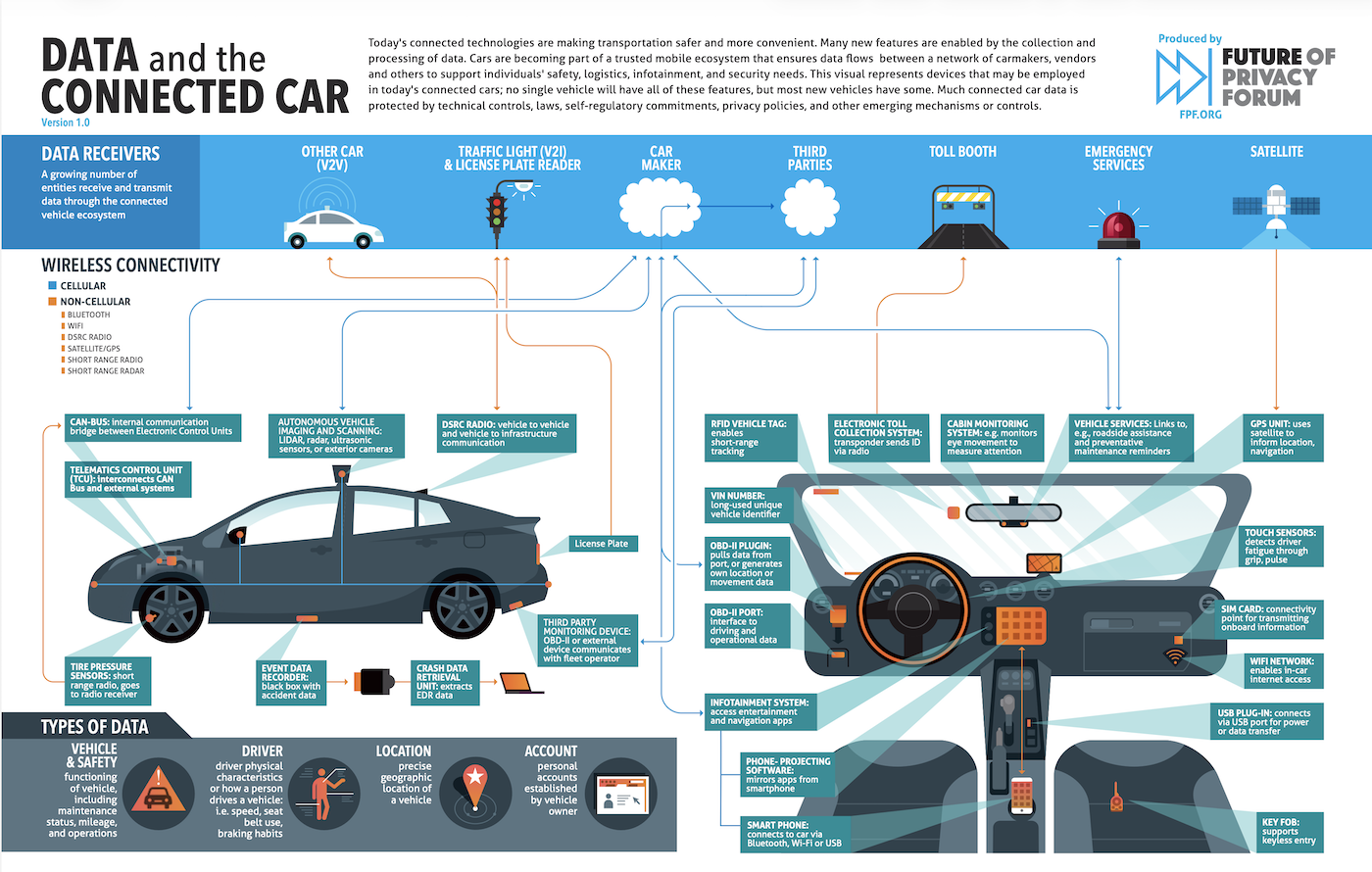
Cars have gradually changed into surveillance devices. Vehicle tracking and data monetization was pioneered by General Motors with their OnStar cellular telematics in 1996. While initially built for emergencies and concierge services, it established the precedent of cars having built-in cellular connections. By the mid-2010s automakers installed Wi-Fi, infotainment systems and companion smartphone apps. These allowed precise GPS tracking, monitoring driving habits and even inside-the-cabin behavior.
In recent years your driving data such as speeding, hard braking, and late-night driving, is collected and sold to data brokers and insurers. This is a windfall for the car makers. Easy money. They take that money with a smile as you are sold down the river. They don’t care about your privacy or rights. Teams of lawyers craft convoluted obtuse language into opt-in terms to make it legal. Most people blindly accept without trying to read it.
Why would your insurer buy your data? To reward you and reduce your premiums? No. They are looking for any excuse to charge you more. Or to cancel your policy. They decide this without telling you. You find out when your next statement shows a higher price or a notification bidding you farewell. There is no warning, courtesy call or argument. You pay or try to get another insurer. That new insurer buys the same data and may refuse to accept you. You are trapped.
New car buyers are finding out they have less control of their own cars. Lane-keeping assist decides you have drifted out of your lane. Perhaps to avoid a pothole or muffler that fell off the car in front of you and is heading at high speed towards your face. You find yourself struggling to regain control. Automatic braking suddenly slams on the brakes at 70 mph because it saw a ghost. Every year more intrusive “helpful safety” systems are added. They make decisions through sensors and software that are often unproven and unreliable. You are just along for the ride.
Next up is technology that decides whether you are “fit” to drive. The kill switch is there to protect you. Nothing to see here, move along. You are not drunk. You are weary from a long day at work, a mild cold or a sore leg from the gym. An AI far away looks at you, runs some algorithm computer code and says sorry. Your car shuts off or won’t start. You will have no recourse. You can be stranded in a remote area or on the side of the highway in a blizzard with nobody to call.
As a bonus, we tell you if your car can only be serviced at dealers, with parts not available on the aftermarket. Your best friends at the dealership can then charge whatever they want with no competition. This extortion racket is legal. Then there are features you paid for that become monthly fee subscriptions after the bait-and-switch free trial ends.
Search for your car, or one you are considering buying, and find out. Take control of your freedom, privacy and autonomy.
The Road to Nowhere
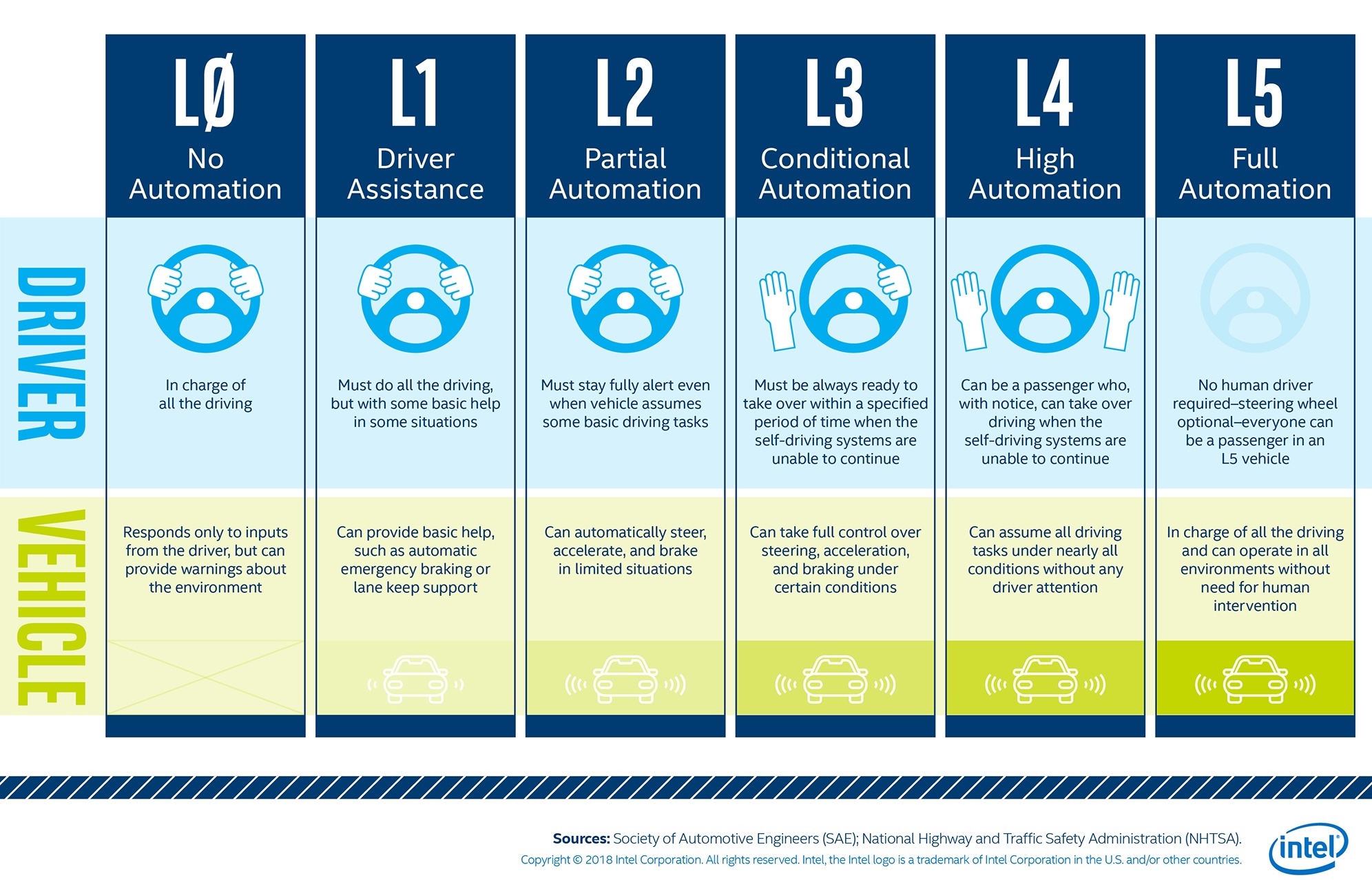
Many of the technologies you see in cars are supposedly meant to improve safety and convenience. Maybe the hundreds of magic little computers and sensors will accomplish these worthy goals. But why all of a sudden can’t we learn to drive and pay attention? Do we need to be told to quit texting and stay in our lane? Do we need technology to parallel park? Even if we are dumbed down to these childish levels there will always be a catch. Technology is not perfect. The more you rely on it the greater your risk of living (or not living) with the consequences when it glitches, makes bad decisions and drives you off a cliff.
We are enamored by the newest gizmos. Many equate newer and more with better. They never knew or forgot the joy of simplicity, quality and reliability. The visceral feel of the machine on the road. The direct unfiltered mechanical connection. The pure joy learning to control and master it. The vehicle manufacturers collude with government regulators to justify every new innovation and make it mandatory. The former increase profits with pricier disposable cars. The latter justify their existence to get bigger budgets, money from taxpayers meaning from you.
Then there is the cost. Did you expect a free lunch? Car prices have risen to crazy heights beyond the means of most people. As simple accident becomes catastrophic when a $500 dent becomes $10,000 when all those cameras and sensors are involved. Dealer-only diagnostic software. Parts which may take a long time to deliver while your car sits on some dusty lot. You of course still must make payments for a car you can’t drive. Computer technicians and no more friendly local mechanics. Labor rates higher than open-heart surgery. Insurers write off your car and double your premiums. Subscriptions instead of ownership. No more paid off car equity. Just endless debits on your credit cards.
The inevitable gradual skill erosion leading ever escalating cries for more tech to make up for sloth and the attention span of a toddler when a new toy is presented. This leads to more automation until we wake up, in the not-so-distant future, being driven around like cattle in a trailer on the way to the final happy meat factory by a robotic monstrosity. No more driving. No more freedom of the open road. The road that leads to nowhere.